Wednesday, October 31, 2012

Walk B4 Run

I largely agree with the consensus. While I can see the benefits and creative joys of expanding the composition experience for freshmen students presented in this article, I think it is too much too soon. While reading, I did, however, find myself thinking in several places that some of the broader multimodal strategies could be incorporated quite successfully.
            In 2010 I was part of a fellowship program that took 20 Native American researchers, with specific historical or cultural projects in mind, for the purpose of each creating a short documentary. The two year process started with workshops on archival research, followed by learning how to use film editing software. With less than 6 months to go before the projects were to be shown in front of the national sponsors, the coordinators were in a panic. This was a pilot project of theirs that was to be the flagship for many more and involved some important federal programs with deep pockets and the films being submitted so far were crap.
            The problem: there was very little attention being paid to script-writing and research organization. The project fellows had almost universally found photos, maps and documents then tried to build a script based on them. It should have worked the other way around, script first, images later, with multiple revisions in-between. Once we figured this out and started helping each other through scrapping and restarting the whole process with a written framework it all came together and we all lived happily ever after.
            So, all this to say, while multimodal is fun and perhaps more engaging, there is a foundational necessity to acquiring good writing skills and a logical structure.
            A secondary, but equally important component of RHET 105 is facilitating the adjustment to a more self-reliant environment. Despite repeated discussions that this is “not your high school English class,” I still have a few students frustrated with not having a detailed point-by-point prescription for an “A.”
But I will keep this article handy when designing next sememster's plan and will most-likely incorporate some of the proposed assignments, or at least their conceptional possibilities.

It's a thin line between fries and shakes

“It’s a thin line between fries and shakes” -The Chappelle Show (I thought to link to the Youtube clip here but I did not want the possibly offensive language to offend anyone so if you're curious, offend yourself)

After reading the Shipka article (and subsequently Calgary and Alex’s postings) I found myself wondering how UIUC goes about implementing these different pedagogical strategies, that is whether fries (linear essays) or shakes (multimodal compositions) are preferred. The easiest way to see this would be to simply look at the “Common Syllabus” and Writing at the University Of Illinios E-text that the Rhetoric department issued to each of us first year instructors.  While the “Common Syllabus” and e-text point (almost emphatically) to untraditional authorship practices like co/group authorship that are meant to give students a preview of what is to come in their major related courses as well as the “Real world” (whatever that is) this is about as far as the college/department is will to go. We only need to look at the grading break down to see that there are 4 essays worth a whopping 75% of the class and similar to Alex and Calgary’s posts, I don’t think that this is a bad thing: most students come to the University with differing experiences/facilities with writing so spending a semester trying to normalize these practices is quite beneficial (and isn’t this why composition courses like this were made in the first place?)
    All of this is not to say that I disagree with Shipka’s article, in fact I agree with a lot of her findings and arguments. The notion that students can compose multimodal productions in response to an assigned task opens up the possibilities for students to pursue various creative solutions. Drawing on semiotics Shipka argues that linear writing based assignments have unfairly dominated composition courses and don’t accurately reflect the increasingly diverse medias that student now face whereas multimodal productions have the potential to do exactly that. As Shipka notes there can be some resistance from students due to the overwhelming possibilities that can result in a sort of paralysis regarding deciding on a certain project. But this multimodal thing seems to be catching on and perhaps, among other reasons I’m sure, this is why in UIUC’s recent conferences for first year Rhetoric students they can submit either a traditional essay or a multimodal poster (even though this limit’s the possibilities significantly). During our orientation to teaching the course this conference was mentioned and it was suggested that students could prepare a presentation (paper or poster based) of their “synthesis” essay since all students would do this in class anyway. I find it a little odd that this multimodal aspect is presented at the end of the semester but maybe what is really intended is a trickle down approach to changing the Rhetoric courses all together.

Or maybe a multimodal framework was just beyond us first year instructors so they are easing us into this way of thinking as well. Either way, I would probably say that UIUC likes to dip their fries into a shake before eating them.

Multimodality: A Polemic


"Man, I wish we had a floppy disk"

After reading this article, I have decided to scrap the final writing assignments for my class, and instead, implement a final project based on textures, sounds, scents, and even tastes. I am thinking I will ask my students to choose a word, explore its etymology, and create a fragrance that represents the misconceptions a modern audience may have about it. Though, in the event that this assignment is too prescriptive, I may allow them to bake a casserole.

Kidding aside, I find the radical posturing of anti-written word sentiment expressed in this article to be off-putting. Maybe it's because I haven't spent years in the field of pedagogy, but I find it far-fetched to think of the written freshman composition essay as this hegemonic beast that must be slayed by the multimodal revolutionaries. The marxist struggle invoked by the epigraph confuses me: "By privileging composing as the main site of instruction, the teaching of writing has taken up what Karl Marx calls a 'one-sided' view of production, and thereby has largely erased the cycle that links the production, distribution, exchange, and consumption of writing" (Trimbur). "[T]aken up" seems to imply that this is a recent development. Maybe I'm wrong, but hasn't written composition always centered the teaching of writing? Didn't Karl Marx use the power of written rhetoric to expose a "one sided" view of production? Writing is what college students do. Whatever field the students of our rhetoric 105 courses choose to pursue, odds are strong that they will be forced to write. That is what sets the agenda. They will be forced to write throughout their college career; we try our best to teach them how to write for the occasion. What's so bad about the written word anyway? I quite like it.

This article reminds me of something Spencer mentioned in class: in these journal articles, do the authors only present the things that work while concealing some of the negatives? While reading this article, I was thinking two things: either the author is an inspirational figure, able to lead her students to stunning intellectual heights, or she is teaching cream-of-the-crop students. I seriously doubt the results she presents are typical. In my wildest dreams, I can't imagine my students putting in the effort of the students written about in this article. Then again, maybe I'm partly at fault in that regard.

One final thing: These articles always seem to conveniently leave out who teaches freshman composition classes. If every large state university was stocked with freshly minted Writing Studies PhDs, up-to-date on the pedagogical cutting-edge, tasked with teaching freshman comp instead of upper-level courses, and with a stake in the outcome of this kind of project, maybe this utopian vision could flourish; however, the reality is far different. Underpaid, overworked adjuncts and (particularly literature) grad students have more pressing concerns than the dismantling of the oppressive written word.

*This post was written in a state of high fever.

Tuesday, October 30, 2012

What *are* we preparing them for anyway?


I was excited by the student projects that Jody Shipka describes in her article. I would love to implement a similar assignment in a future RHET class, and I readily accept that this sort of project teaches students the same writing and research skills that they will need for other, more traditional writing-based assignments. However, like Calgary, I do have some reservations regarding the idea of a class that is wholly based on this multi-modal task-based framework, and would therefore like to consider the integration of a project like this into a more traditionally writing-based class. After all, aren't we preparing our students (or at least trying to prepare them) for the writing they will encounter over their college career? And isn't it only fair that we give them a chance to work on the more traditionally-structured academic writing that they will be asked to produce while the teaching focus is on their writing? For instance, when I am grading literature essays, my feedback is geared toward the student's skill at literary analysis, and while the student's skill at writing will inevitably inform the final grade, it's not what I'm teaching. The composition class, then, is a one-semester chance to give the student's writing skills the attention they deserve without taking away from important discipline-specific teaching and learning. I've noticed that my students this semester seem to respond very well to the example essays in the etext; I suspect having a model of the kind of work they are being asked to produce gives them confidence in their own ability to produce, as well as reassurance and guidance.

None of this is to say that I think we should coddle them by teaching them from within their comfort zone only. In fact, I can see the huge benefit to forcing them outside of their comfort zone by assigning the very assignments that Shipka describes (what would a prompt for this sort of assignment look like, by the way?), which require students to consider their goals and rationalize their process in a way that many academic essays may not. But if the skills they gain through these projects are the skills that they will continue to use in their careers as writers, wouldn't it also be useful to make the transition of these skills to more traditional writing assignments a focus of the class by including them in the syllabus as well?

Even if it teaches students all they need to know about the process of writing, a multi-modal task-based assignment isn't going to give them practice with the weird and wonderful quirks of academic writing (and hey, maybe that's OK?), but if students are going to be faced with academic writing later on, should we ignore the opportunity to let them work on it while their writing skills have their instructors' full attention?

Also (this isn't totally unrelated), here is a great Onion article in honour of student evaluation time.

Monday, October 29, 2012

Re-imagining composition

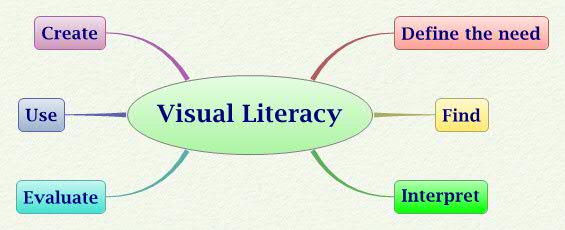
image source: http://acrlvislitstandards.wordpress.com/2010/09/03/concept-map/
Welp, I’m not sure how I feel about the Shipka article…so I guess what I’ll do is try to talk about my reservations here without rambling or ranting. That is to say, I will try to be coherent.
On the one hand, Shipka addresses in her article certain pitfalls of conventional, compulsory composition in college that I have personally observed and would absolutely seek to avoid when designing my own curriculum. As an English major in undergrad, I was pretty sure the only reason I was able to complete certain written work for professors without wanting to bash my head in, as some of my peers always seemed to be on the verge of doing, was that I genuinely enjoy writing and have an aptitude for it. There’s nothing mysterious or confusing about composition to me. It can be tedious but I can understand it (somewhat intuitively) in ways I have little to no hope of understanding other disciplines (which others may grasp somewhat intuitively). Yet the “fill-in-the-blanks or ‘cookbook’” (284) methods of composition seem to lend themselves to the manifestation of apathy, boredom and frustration in those students, who are hard-pressed to identify the usefulness or purpose behind the written work they are assigned. To some, writing is a mystery and a drudgery and something to survive. This is a not insignificant fact, which should be considered when designing coursework. But I don’t necessarily subscribe to the notion that students’ discomfort with written composition necessitates a complete overhaul of composition curriculum, such that writing becomes only an equal or lesser part of the whole. Certainly I have witnessed classes in which too much emphasis is placed on achieving a prescribed set of goals to attain an acceptable grade, without any explanation or even indication from the professor as to the function of said tasks and what students should take away from the various elements of written composition with which they are asked to engage (from research to drafting to peer review to revision).  But this is a part of our own curriculum at UIUC that I am particularly pleased with: a focus on process in research and composition, which de-emphasizes the often unfathomable (for some) rules of grammar and seemingly arbitrary conventions of format and style. Which acknowledges that the fundamental elements of written composition may be more easily accessed and employed when the student writer is allowed to engage with a topic or their own choosing, based upon their own specific interests. And the curriculum here is still writing-centric. I don’t question Shipka’s interest in redefining our perception of what college composition is or could be, but do take issue with an apparent desire to institute a multimodal curriculum in lieu of one which is focused entirely on writing. It seems to me that we are talking about two separate methodologies, which have equal value and could be taught within the same program--separately or as two distinct classes within a block. Maybe I’m just a curmudgeonly person who values language and written expression to the point where I am unable to see this issue without bias (possible!), but I still think that a class which focuses exclusively on writing and its processes should be compulsory for undergraduates. In fact, I think it’s essential (but that's another blog entry). Of course the old model is broken in many ways but that doesn’t mean you re-invent the wheel, necessarily; it just means you have to find new approaches and philosophies. Shipka has done that obviously, and I appreciate her efforts; I’m just not entirely sold on her vision of how and when her ideas should be employed.

Wednesday, October 24, 2012

A Few Words for Empathy


Is it our responsibility to inspire students? I think so, if by inspire we mean encourage creative activity and engage in intellectual discussion. Is it our responsibility to teach social activism? I’m alarmed by this idea. It implies a particular kind of activism as an end goal. We aren’t elected leaders and our students are individuals with their own histories, interests, and agency. (Even their apathy may be a kind of agency, a way to adjust to or resist a particular educational dynamic. And we should recognize this.) I think we should be attempting to understand our students’ lifeworlds (in order to meet them in real dialogue) rather than rocking their worlds.


Last fall, I took a seminar on culture and education with several K-12 teachers. Each week I was amazed and humbled by their dedication to understanding their students’ diverse backgrounds and values. They worked to develop curriculums and evaluations that met students’ needs rather than imposing their own cultural standards on the classroom. This is not to say they didn’t demand and encourage growth. But there is a difference between opening minds (in a cultural of thoughtful dialogue) and mobilizing minds.


Certainly, I think we should expose students to new ideas and make the familiar strange. (I think we’d have more a open-minded student-population if we required everyone to take an anthropology class.) We can model respectful dialogue and thoughtful engagement. We can suggest ways for students to self-reflect and become aware of their own biases. We can speak persuasively and demonstrate the power of words and ideas for our students. We can remind them to evaluate the author(s) behind a text and consider an audience’s probable reaction to it. We can encourage them to ask questions and we can try to give them honest answers. But we do not have (and I would not want) the power to change their minds. Such change is internal and multi-faceted (and mysterious) and students’ minds are their own.


Who Care About Libya?

I would love to structure my class into a way that made students care about the things that I care about like the presidential election, Middle East foreign policy, cosmopolitanism, poetry, but I have reservations about making Rhetoric 105 into Sara teaches what she wants and makes kids write papers.

These guys are shaking hands. Should I care? Who are they?
If you didn't watch the debate, you won't understand this meme!
But I think my inexperience in teaching has led me to miss this golden opportunity to force students to care about the presidential election, and I can only hope that in 4 years, I'll have a room of eager 18-19 year old students willing to think about registering to vote and I will have the tools to teach them all the important things about being an American citizen. The only thing is that I'm not teaching a Political Science class and I'll confess, I didn't take a single American Government class in my undergraduate years even though I majored in Political Science. International Relations was my main focus, and even though I talked with my students about the attack U.S. Consulate in Libya and my students wrote their newspaper analysis on articles about the attack, my students didn't even remember where Libya was located.

I'm a country!
Clearly, I haven't structured my class to address current events or foreign policy or Libya and my asides in class are only asides. Reading J. Elizabeth Clark's "Versus Verse: Poets Against War" I kept thinking, wouldn't this be amazing? I could teach poetry, foreign policy, AND composition with low stakes writing assignments and papers and my students will be educated in everything wonderful in life and I will change the world. Could I throw in readings about Responsibility to Protect? Cosmopolitanism? Could my students be better citizens of the world? I could teach international poetry about important things like war, immigrants, and culture and make them understand what other people elsewhere and thinking and feeling? Thinking about Adam Barrows "Teaching the Literature of Revolution," should I force them to read literature that has emerged from the Arab Spring to drive home my personal views about the importance of paying attention to what's going on in the world?

But that's not my job, is it? Is it better that my students research something they're interested in like women's equality in sports and university nutrition and diversity at the college level? Are they only researching those things because I'm not forcing them to open up their minds and research foreign policy or exposing them to poetry about war? If I threw out the etext and provided a packet of readings on foreign policy to teach them about how to read scholarly articles and poems to teach them reading for meaning, am I helping the students or just standing on my graduate teaching assistant pedestal and proclaiming "You must care about the things I care about!"

I am on my ottoman pedestal with all that is important--Santa Hedgehog. This is what I care about! (not my dog.)
It's something for me to think about for next semester and what I would change and improve from this semester. Would I even want to veer so far from the common syllabus and the etext? Would it really benefit the student or just make me feel good about that class I'm teaching? Which is more important?